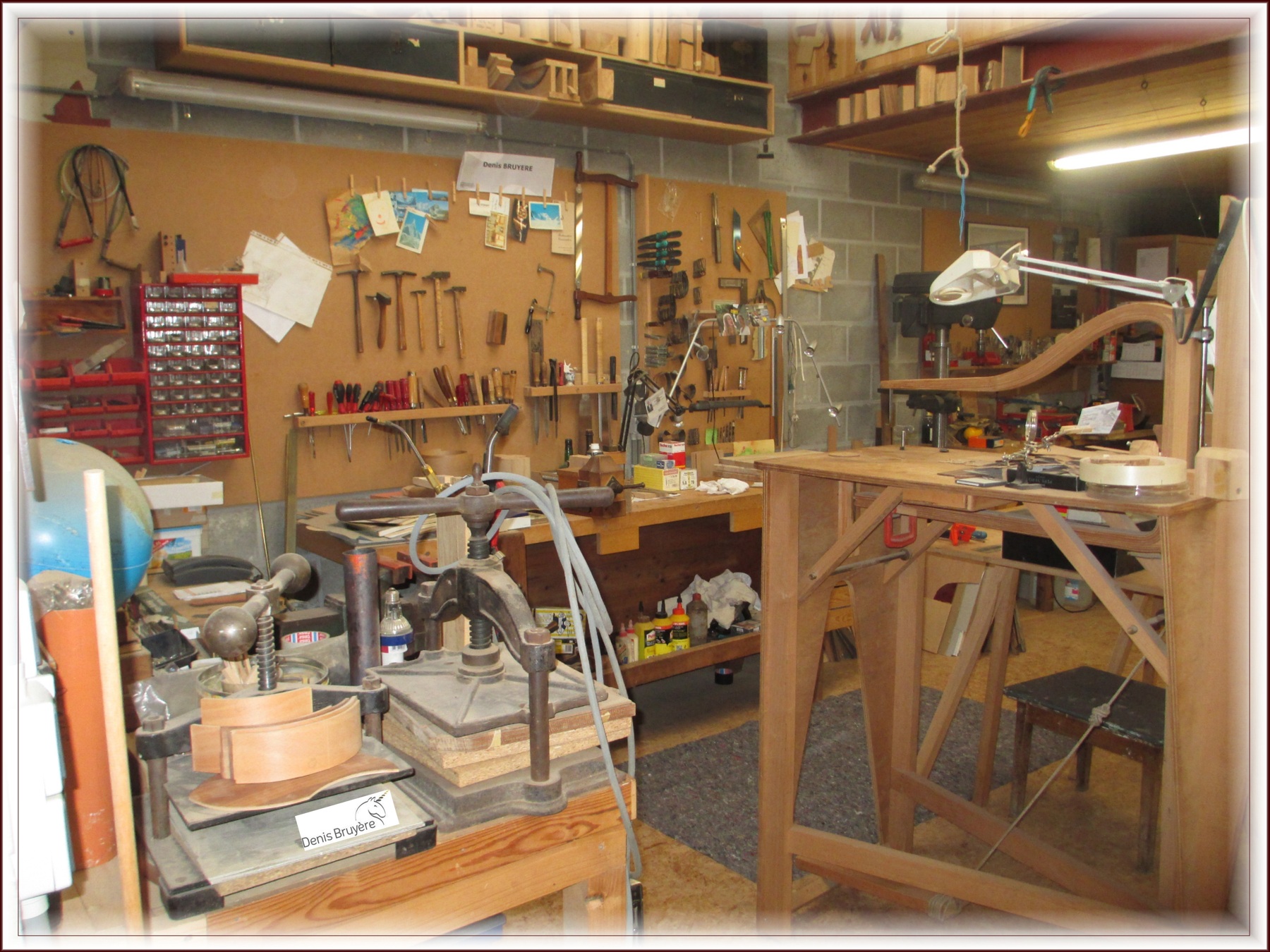
Wood-veneer marquetry
Grain, colour and small fitted pieces become a new surface for contemporary furniture.
EUROPE TODAY / Wooden home
A drawing becomes a shallow relief as sharp tools shape the light across a wooden surface.
Hand carving continues in contemporary furniture and interior work, where makers cut relief ornament into wooden components or panels. A design begins with drawing or modelling, then moves into the material through a controlled sequence of cuts. Sharp tools, secure workholding and an understanding of the chosen wood support the process. French professional training still teaches ornamental carving, while craft organisations document active practitioners. The finished result can be quiet or elaborate: depth, edges and small changes of surface determine how light moves across the wood.
An introduction to the sequence. Materials, tools and working methods vary with the project.
Develop the ornament and its proportions for the intended furniture component.
Select and secure the wood, transfer the design and sharpen the appropriate tools.
Remove material in stages, establishing the main depths before refining the forms.
Complete the edges and small details, then prepare the component for its intended finish and assembly.
THE DECISIONS BEHIND THE DETAIL
Decorative relief-carving demonstration in Slovakia
Palica, Hontianska parada 2003-DSC01162.JPG, 23 August 2003, via Wikimedia Commons. CC BY-SA 3.0. Proportionally resized.
Original photo ↗ · CC BY-SA 3.0 ↗
Proportional resize and JPEG encoding only; no cropping or content alteration.
KEEP EXPLORING
Grain, colour and small fitted pieces become a new surface for contemporary furniture.
Two hands work on opposite sides of a taut textile, turning linked stitches into lines, texture and light.
Steam, a shaped block and careful stitching turn flexible material into a wearable volume.