Handmade millinery
Steam, a shaped block and careful stitching turn flexible material into a wearable volume.
EUROPE TODAY / Clothing
Two hands work on opposite sides of a taut textile, turning linked stitches into lines, texture and light.
At an embroidery frame, the visible gesture is small: a fine hook enters the ground, catches thread from beneath and draws it into a loop. Repetition creates a chain. The maker coordinates both hands across the textile, keeping the sequence controlled as the design develops.
Lunéville names related practices that deserve a careful distinction. The traditional point de Lunéville uses cotton thread on cotton tulle. Its beaded and sequinned relative introduces decorations already threaded onto the working thread. These are secured with successive loops. In this embellished form, the maker works from the reverse while the decoration accumulates on the face.
This remains a living fashion skill. France's Ministry of Culture documented active practice and professional transmission in 2025. Specialist teaching continues in Lunéville, while professional courses elsewhere in France cover frame preparation, chain-stitch filling, seed beads, sequins and the application of finished embroidery. Current practice connects controlled repetition with new drawings and combinations of materials.
For a garment, the interesting question is how decoration occupies the fabric. A line can trace an edge; a filled area can create a denser field of light. Separately worked motifs can also be applied to clothing. Looking at the face and reverse together makes the construction easier to understand: the glittering surface depends on the less conspicuous thread structure that secures it.
An introduction to the sequence. Materials, tools and working methods vary with the project.
Select the ground, thread and embellishments, transfer the motif and prepare a small trial. Decide whether the embroidery will be worked directly or applied later.
Secure the textile on the frame so both hands can work consistently. Establish the starting point and the direction in which the motif will develop.
Coordinate hook and thread to form chain stitches. For bead or sequin work, bring each pre-strung element into position as its securing loop is formed.
Finish the thread ends, inspect both sides and release the work appropriately. Where the design calls for an appliqué, attach the completed motif to its destination.
THE DECISIONS BEHIND THE DETAIL
FILM · Broderie perlée de Lunéville : découvrez la technique pour broder des perles et des paillettes
Jelena demonstrates Lunéville chain stitches for attaching beads and sequins to organza. Published by Perles & Co in 2017.
KEEP EXPLORING
Steam, a shaped block and careful stitching turn flexible material into a wearable volume.
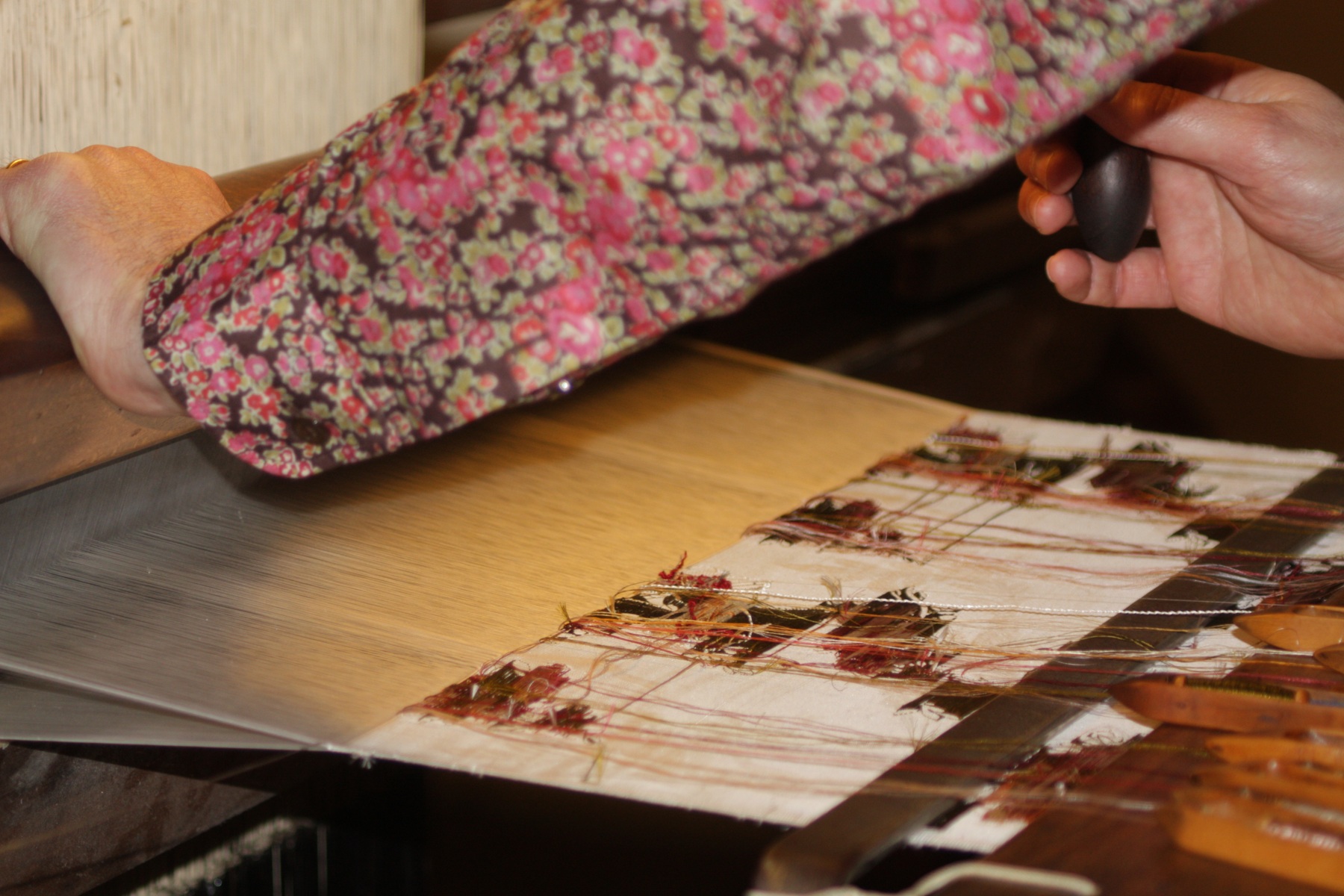
Yarn, pattern and loom settings meet in the surface of the cloth.
Fine thread becomes a textile through the accumulation of needle-made structure.