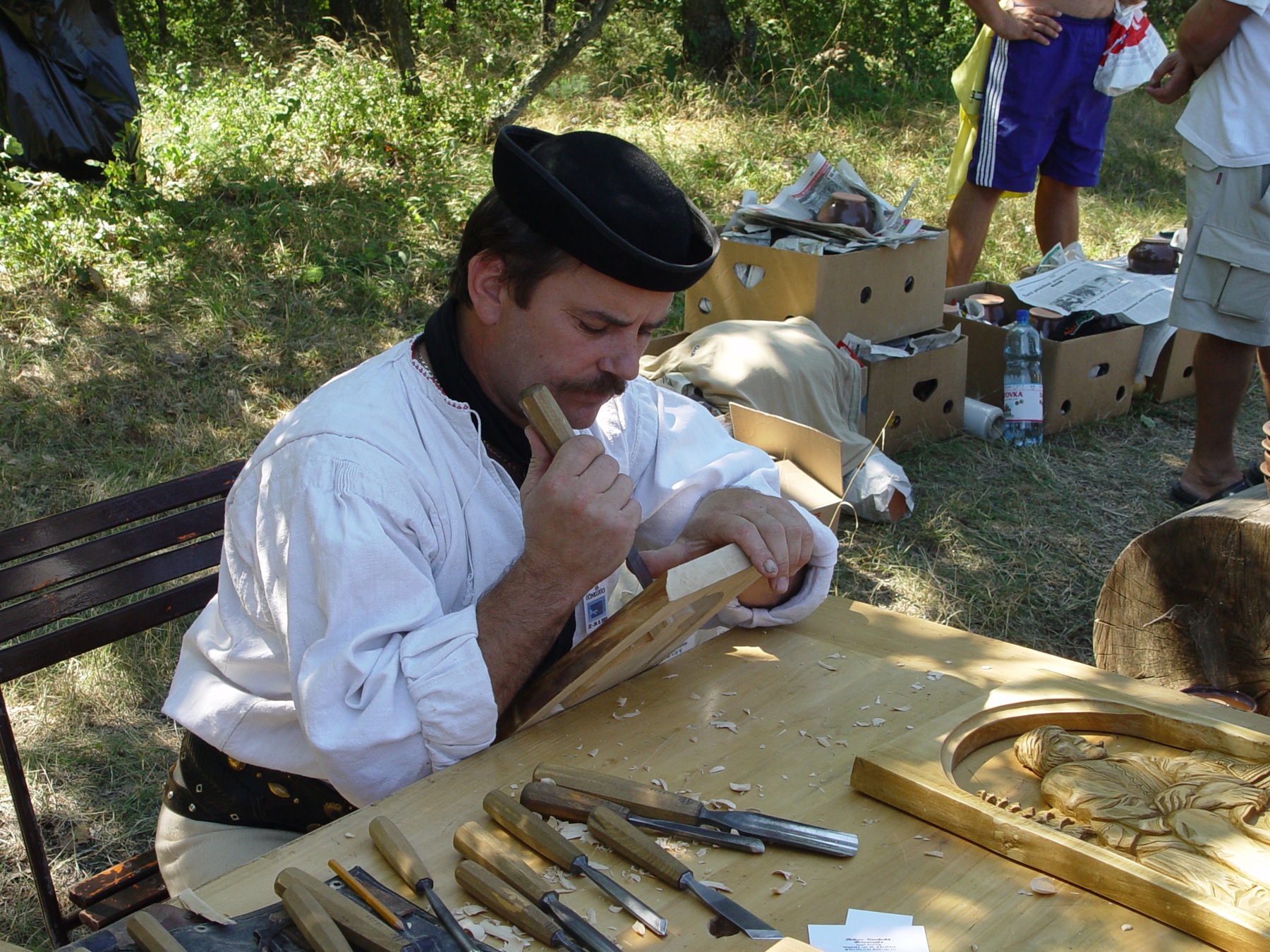
Hand carving for wooden furniture
A drawing becomes a shallow relief as sharp tools shape the light across a wooden surface.
EUROPE TODAY / Wooden home
Grain, colour and small fitted pieces become a new surface for contemporary furniture.
Marquetry remains an active craft in European furniture and decorative work. The maker selects thin veneers for their colour, grain and visual effect, then cuts and fits pieces to build a planned surface. A small change in grain direction can alter the way a shape reads in the finished design. The assembled veneer work is applied to a supporting surface and finished for its intended use. Craft organisations and current training programmes continue to teach these skills for furniture, interior surfaces and commissioned decorative pieces.
An introduction to the sequence. Materials, tools and working methods vary with the project.
Develop a drawing that responds to the furniture surface and intended visual effect.
Select and orient thin woods for their colour, figure and grain.
Cut the component shapes and fit the adjacent pieces into the assembled pattern.
Bond the assembled veneer work to its support, then level and finish it appropriately.
THE DECISIONS BEHIND THE DETAIL
Tools in a Belgian cabinetmaking workshop
Amaury Duhameau, Atelier de Sassor Denis Bruyère (2).JPG, 29 August 2014, via Wikimedia Commons. CC BY-SA 3.0. Proportionally resized.
Original photo ↗ · CC BY-SA 3.0 ↗
Proportional resize and JPEG encoding only; no cropping or content alteration.
KEEP EXPLORING
A drawing becomes a shallow relief as sharp tools shape the light across a wooden surface.
Two hands work on opposite sides of a taut textile, turning linked stitches into lines, texture and light.
Steam, a shaped block and careful stitching turn flexible material into a wearable volume.