Lunéville tambour embroidery
Two hands work on opposite sides of a taut textile, turning linked stitches into lines, texture and light.
EUROPE TODAY / Clothing
Feathers are selected, coloured, cut and shaped before careful assembly turns them into light fashion ornament.
Plumasserie remains a specialist French fashion craft for hats, garments, accessories and performance costume. The maker first understands the intended form, then selects and prepares feathers for the required colour, scale and movement. Cutting, curling and controlled assembly can change the outline and volume without hiding the material's natural lightness. Contemporary vocational training connects these hand skills with drawing, colour, safe material treatment and precise finishing. The sequence varies with the feather and design, but every stage depends on close observation and a light, deliberate touch.
An introduction to the sequence. Materials, tools and working methods vary with the project.
Develop the ornament in a paper maquette and choose feathers whose size, structure and movement suit the design.
Prepare the feathers and, when the design requires it, dye and dry them under controlled conditions.
Use fine cutting and curling tools to refine outlines, separate barbs and establish the intended volume.
Assemble the prepared feathers by stitching, wrapping, weaving or adhesive on the appropriate support, then inspect the final silhouette.
THE DECISIONS BEHIND THE DETAIL
FILM · Halana, future plumassiere
Produced by Onisep TV, France's public career-guidance service, this French-language film follows Halana training in plumasserie: the transformation of feathers into fashion, millinery and couture elements. Workshop views keep attention on the material, fine tools and hand-controlled shaping rather than on a sales campaign. Onisep's vocational description confirms the wider sequence of selection, dyeing, cutting, curling and assembly taught in France. The official page lists publication in January 2024 and provides its own player and matching cover. The film records one trainee and learning setting; techniques vary by design, and GARDEN does not claim that any product sold here was made by Halana or the workshop shown.
KEEP EXPLORING
Two hands work on opposite sides of a taut textile, turning linked stitches into lines, texture and light.
Steam, a shaped block and careful stitching turn flexible material into a wearable volume.
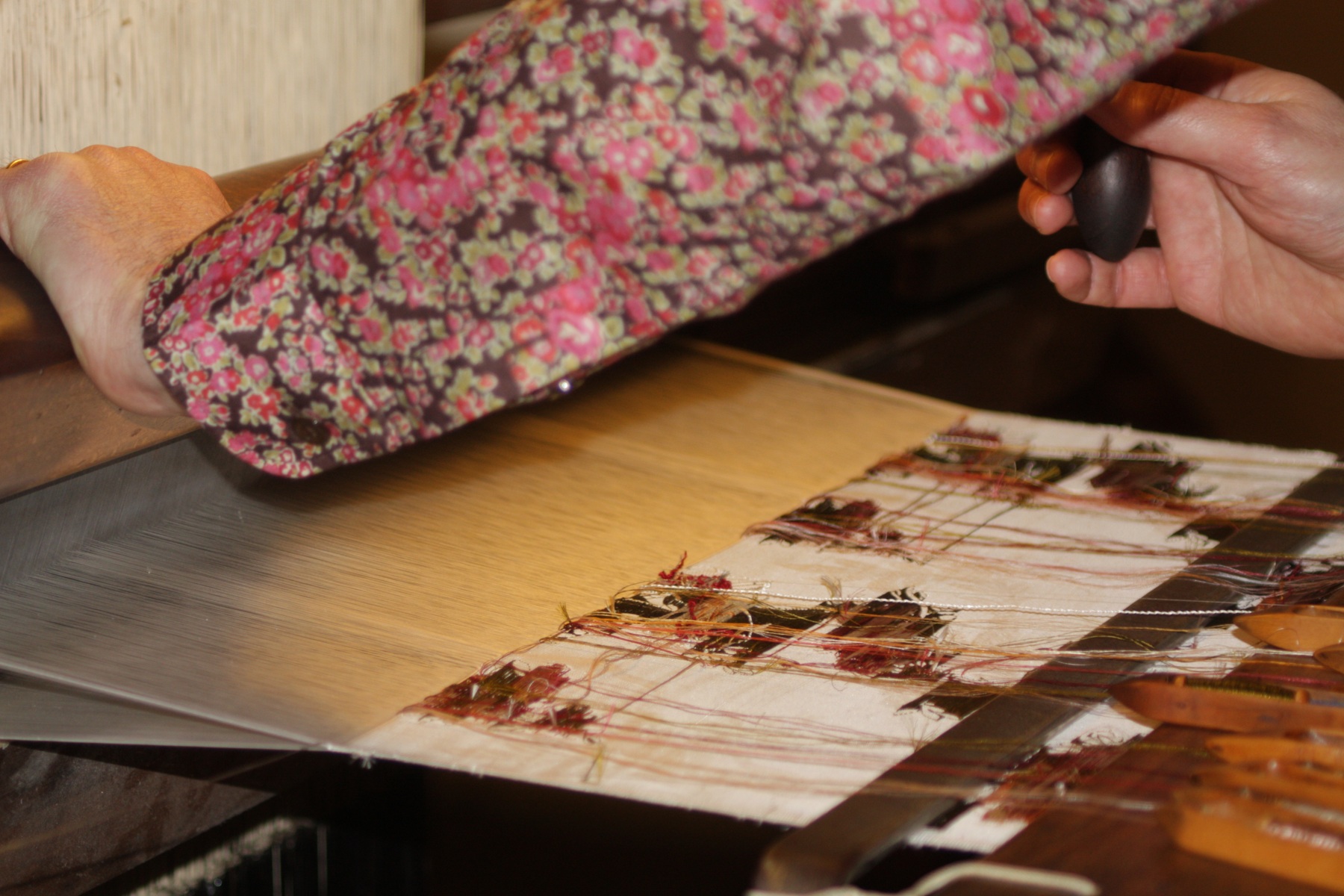
Yarn, pattern and loom settings meet in the surface of the cloth.