Lunéville tambour embroidery
Two hands work on opposite sides of a taut textile, turning linked stitches into lines, texture and light.
EUROPE TODAY / Clothing
Dyed cloth is cut into petals, heat-shaped into volume and assembled as a flower for clothing or accessories.
French fashion flower makers, also called fleuristes de mode or paruriers floraux, create textile flowers for clothing, hats, jewellery, performance costume and selected interiors. A specification guides material, scale and colour. Cloth is prepared and dyed, petals are cut with shaped dies, then heated tools give each piece curve and relief. Petals, leaves and stems are assembled by stitching or adhesive and finished as a composition ready to mount. The work combines repeatable workshop stages with close judgement of colour, pressure and three-dimensional form.
An introduction to the sequence. Materials, tools and working methods vary with the project.
Choose cloth for the required effect, apply sizing where needed, dye it cold and allow it to dry.
Use shaped metal dies to cut consistent petals and leaves in the sizes specified by the design.
Press each cut piece with heated embossing tools or controlled folds to create curve, veins and volume.
Build the centre, arrange petals, foliage and stems, then secure the composition by stitching or adhesive to its support.
THE DECISIONS BEHIND THE DETAIL
FILM · Sidi, futur parurier floral
Produced by Onisep TV, this French-language vocational film follows Sidi training as a parurier floral, or fashion flower maker. The process begins with cloth: it is coloured and prepared, then cut into varied petal shapes before the pieces are formed and assembled as ornament for garments and accessories. The official education pages identify die-cutting, cold dyeing, heated shaping, drying, stitching and adhesive assembly as current workshop stages. Onisep published the film in January 2024 and supplies the official player and matching cover. It documents one trainee and learning environment, not every workshop's method, and GARDEN does not claim that products sold here were made by Sidi or the people shown.
KEEP EXPLORING
Two hands work on opposite sides of a taut textile, turning linked stitches into lines, texture and light.
Steam, a shaped block and careful stitching turn flexible material into a wearable volume.
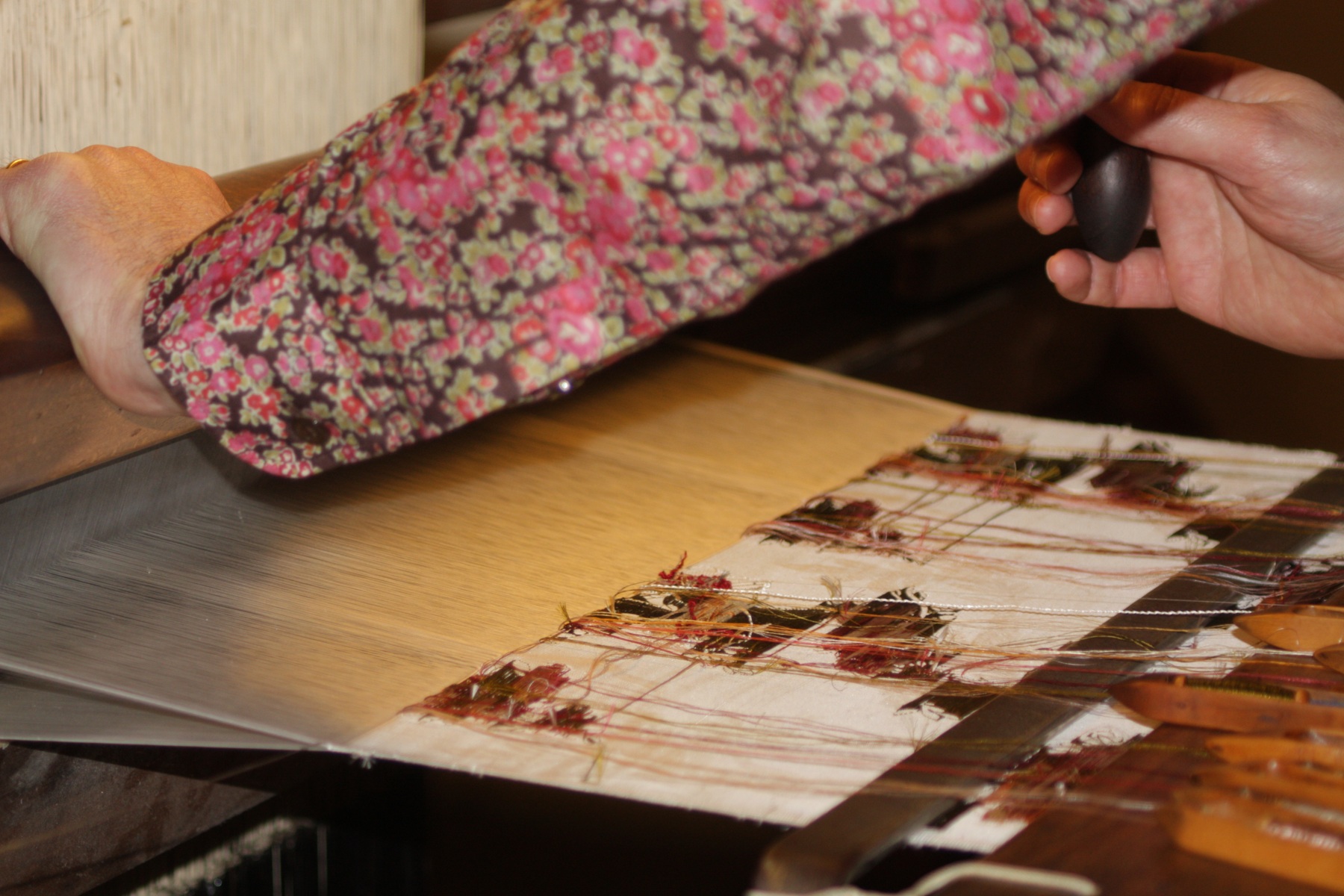
Yarn, pattern and loom settings meet in the surface of the cloth.