GARDEN JOURNAL / ISSUE 03
The City Escape Edit
A four-piece menswear capsule for a city break
One ivory knit. One pair of trousers.
Two outer layers, with different intentions.
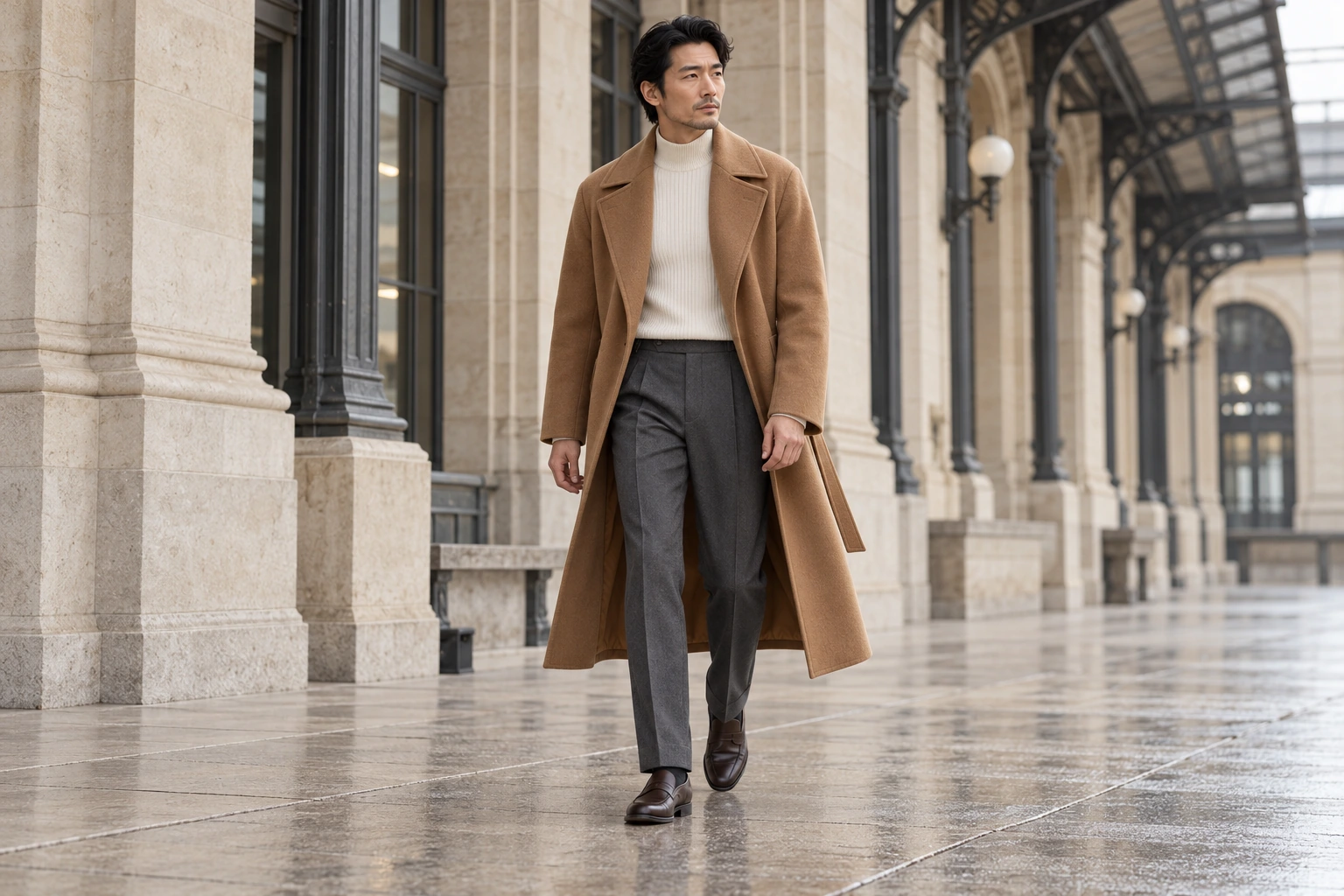
A small city-break wardrobe can still have a clear point of view. Here, the change comes from the length of the outer layer and the way it frames an ivory centre.
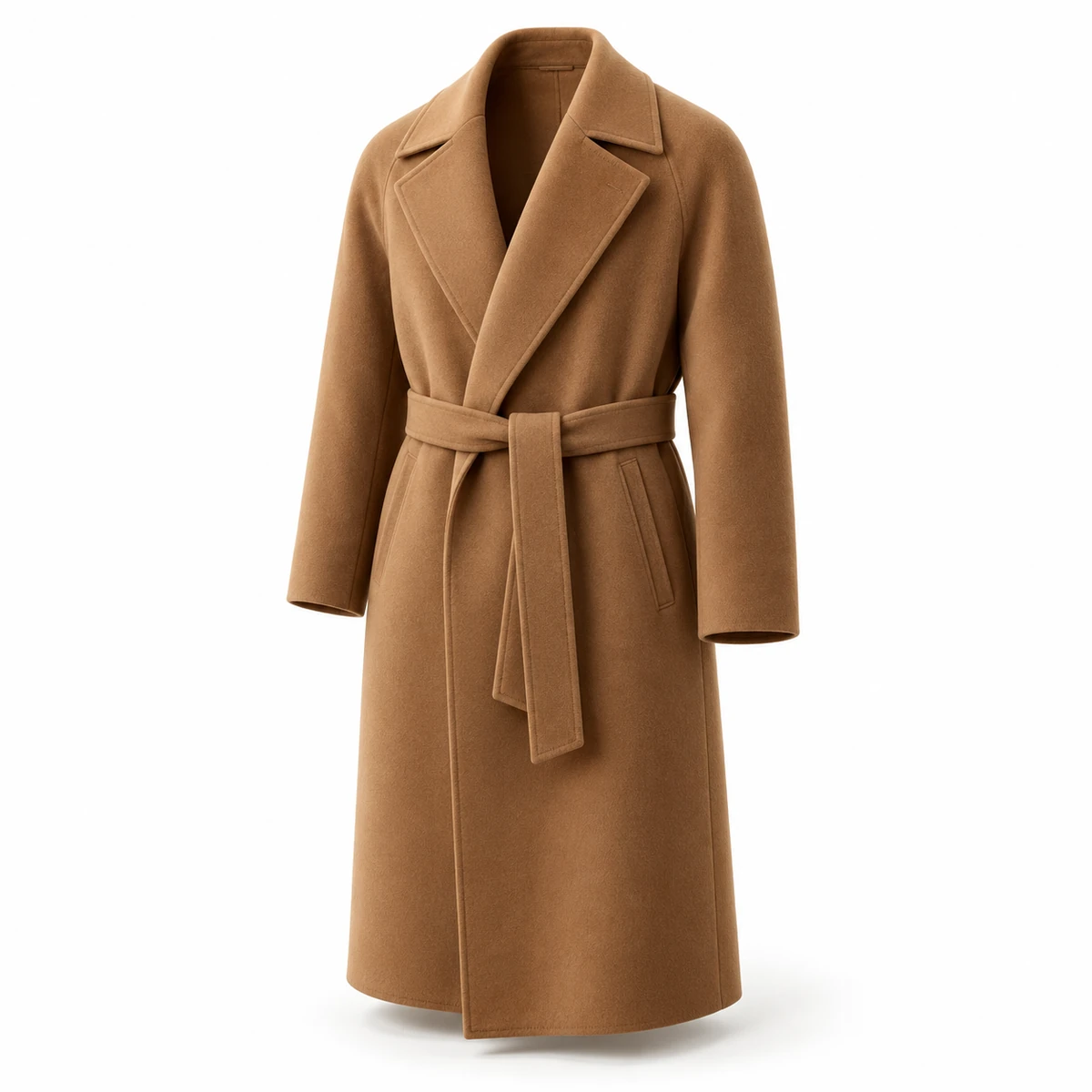
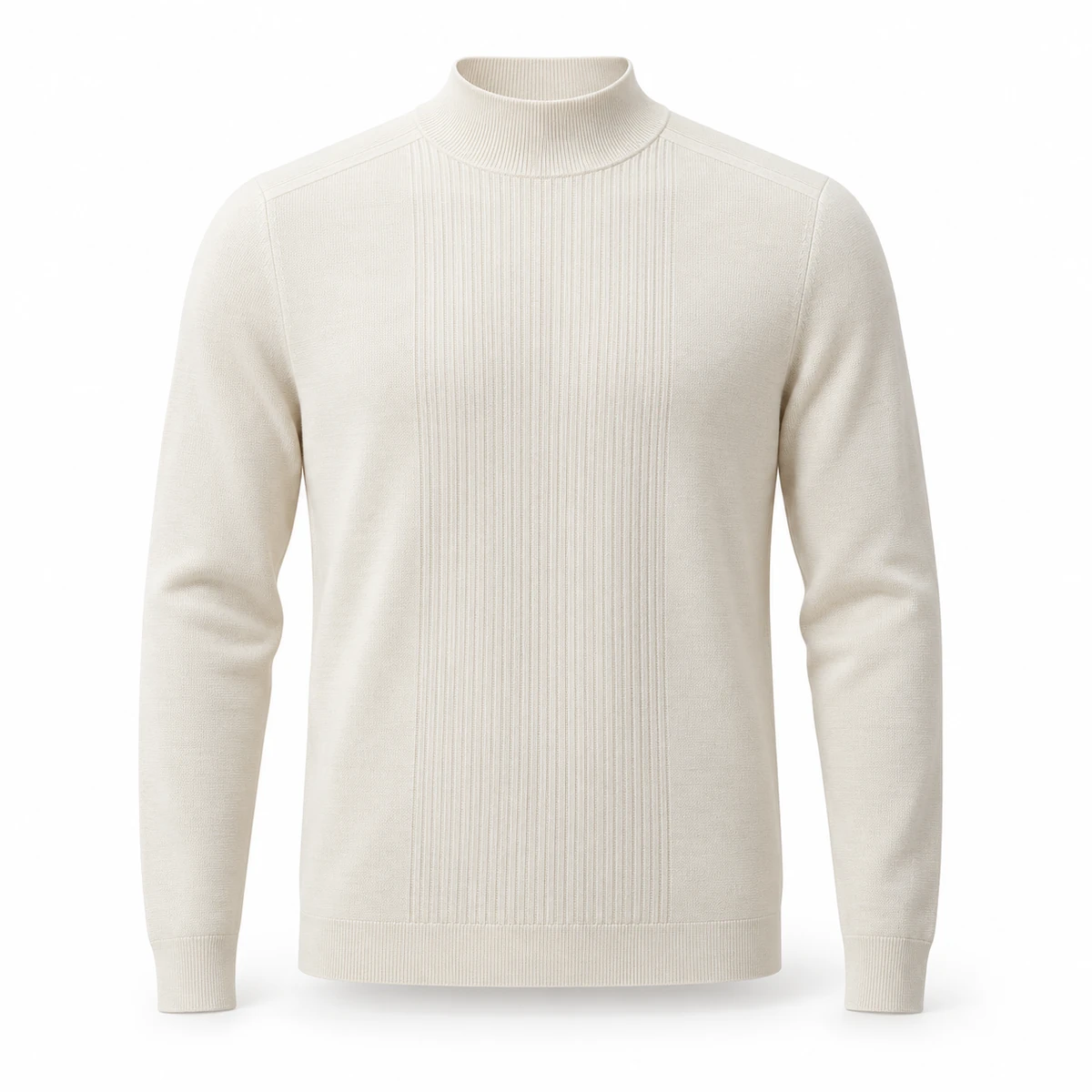
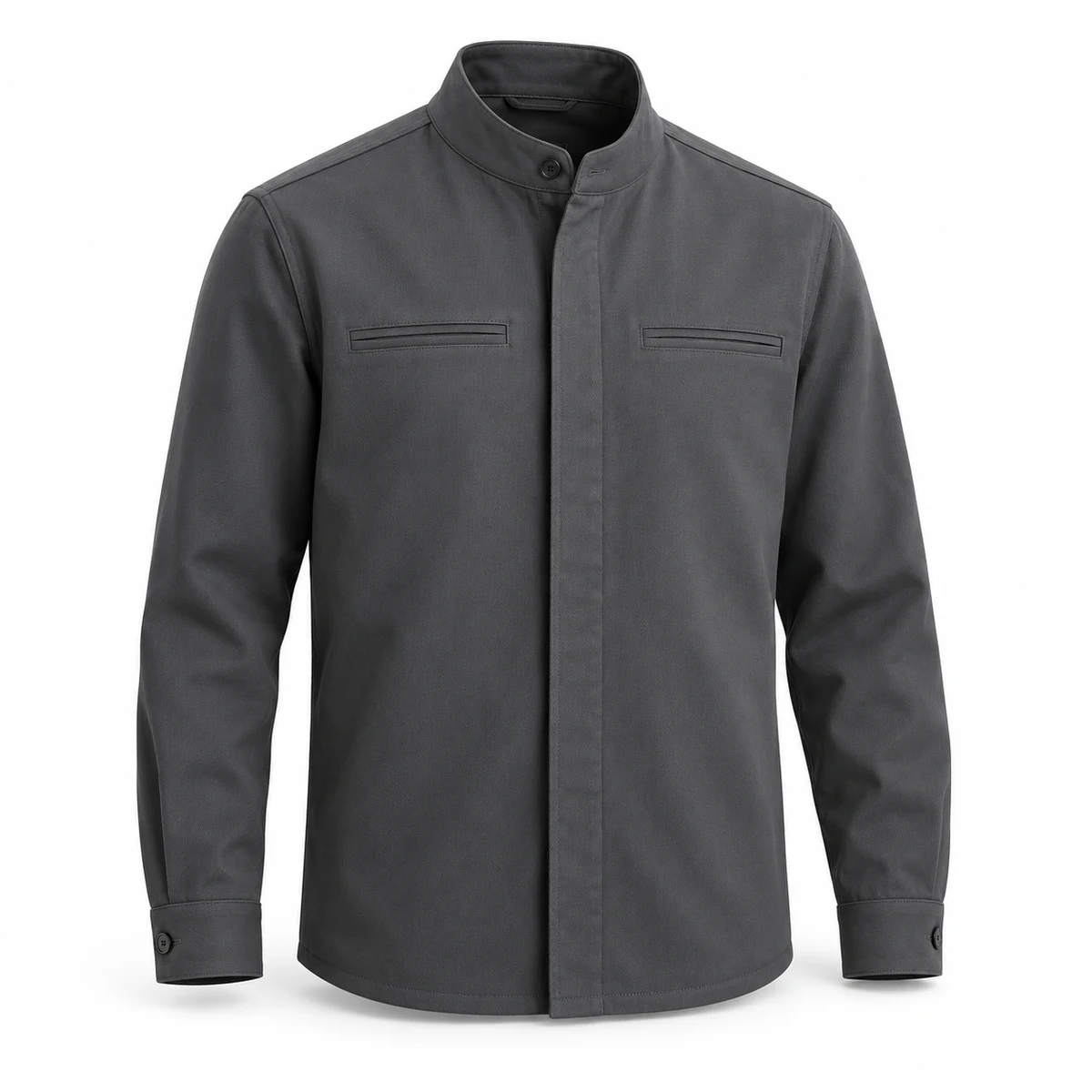
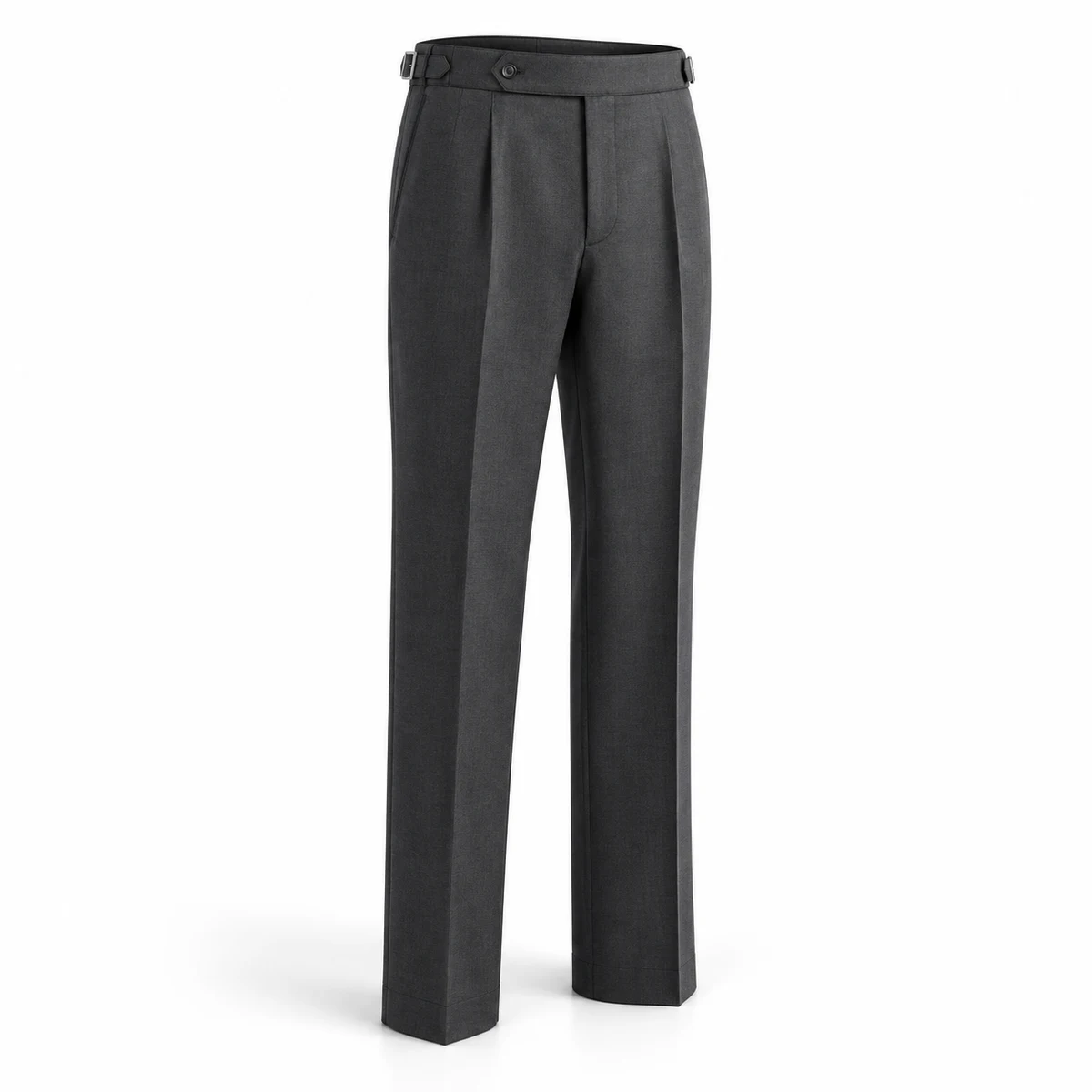
Four designs connect the two illustrations: the Lorn Dune Cashmere Overcoat, Eira Ivory Merino Mockneck, SHU Graphite Travel Overshirt and SHU Slate Pleated Trousers. The names and textile descriptions come from the catalogue; this edit looks at their visual relationship rather than making a packing or weather-performance claim.
The fashion images are AI-generated styling illustrations based on catalogue references. This is a visual styling review; the models and settings are fictional.
LOOK 01 / THE OPENING LINE
Give the long coat an uninterrupted centre.
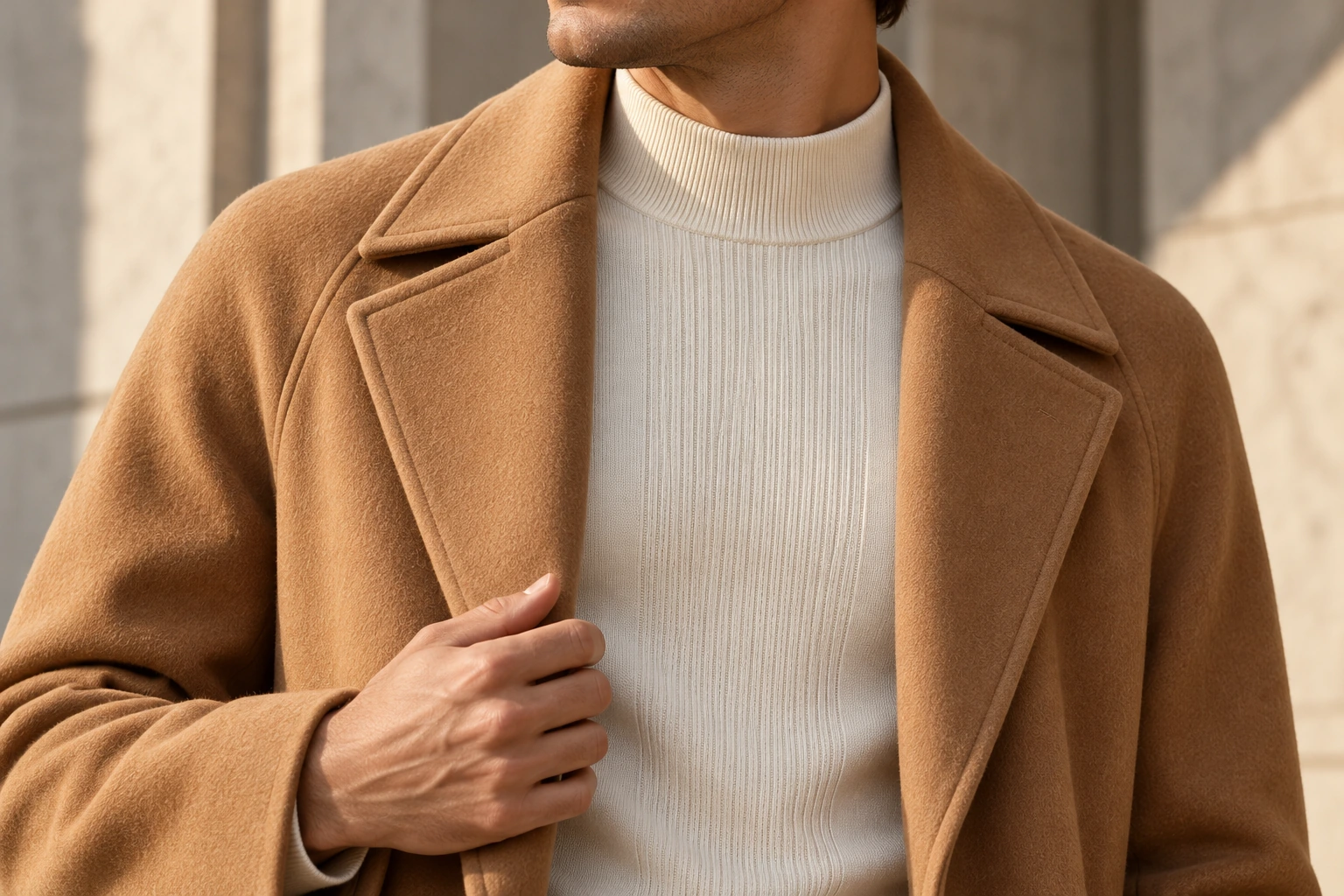
For the arrival look, the camel coat stays open. Its broad notched lapels frame the compact ivory neckline, and the lighter knit leads into the trousers’ pressed line. With the belt relaxed towards the back, the front reads as two long vertical edges rather than a tied waist.
The coat’s generous collar and raglan shoulder make the upper outline softer than a sharply squared jacket. The slate trousers bring a straighter line below it. Keep their hem clear enough to show the shoe’s shape; excess fabric pooling around the ankle would interrupt that line.
Camel, ivory and slate do different jobs. Camel creates the outer frame, ivory draws attention towards the face, and the darker trousers ground the outfit. The plain brown shoes shown here sit close to the warm coat without adding another bright accent.
LOOK 02 / THE SHORTER LAYER
Keep the base. Change the outline.
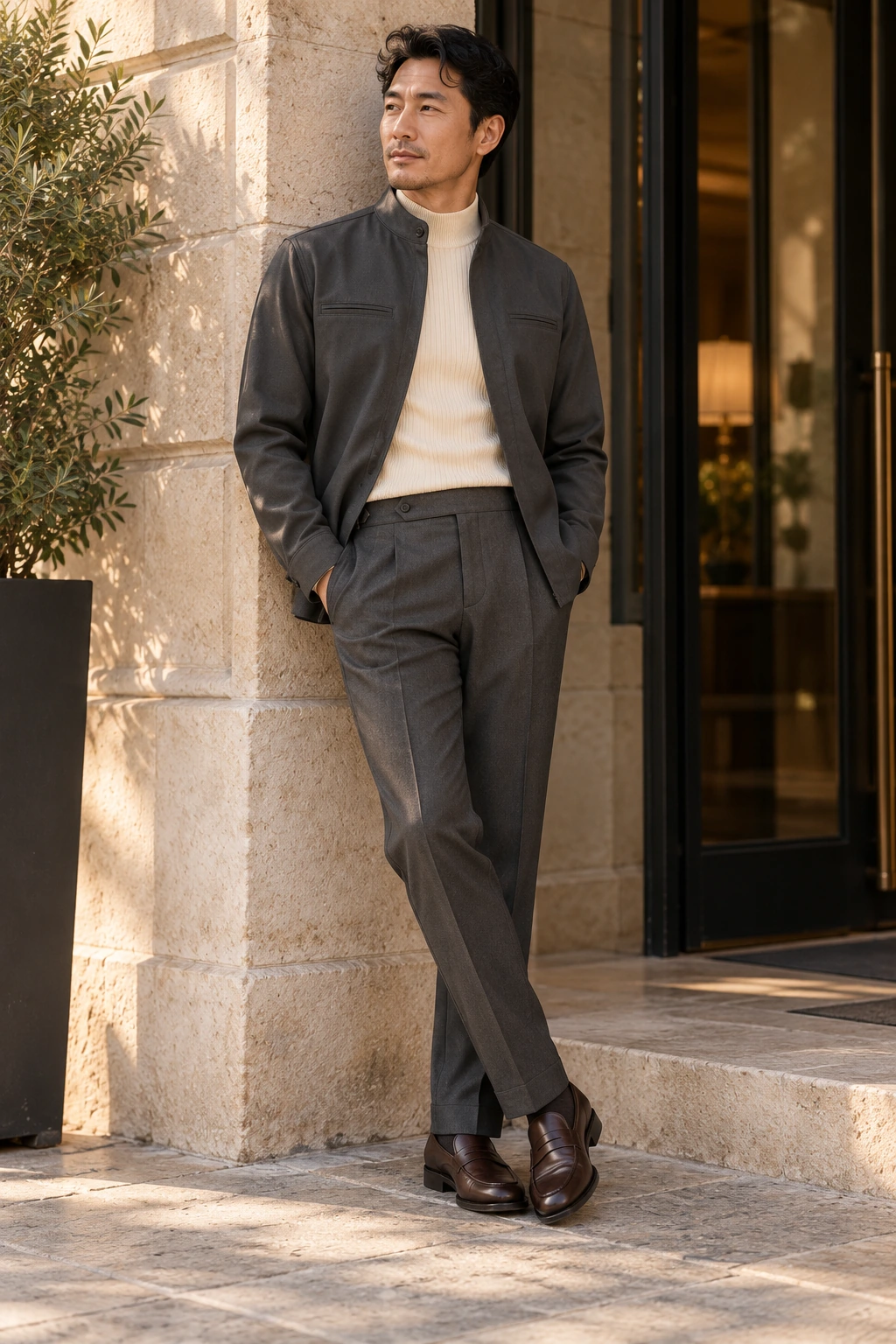
The graphite overshirt replaces the long coat for our second city scene. Its stand collar, concealed placket and two narrow welt chest pockets give the torso a quieter, more compact outline. Worn open, it lets the same ivory mockneck remain the central light area.
The overshirt and trousers are related greys rather than a matching suit. That distinction is useful: the eye reads separate layers, with the ivory knit providing a clear break between them. The forward pleat and straight trouser leg keep the lower half composed beside the shorter top.
Check the overshirt’s shoulder, chest and sleeve measurements with the intended knit underneath. An illustration can suggest a layered silhouette; it cannot establish whether the actual pieces leave enough room at the armhole or collar.
- Shared foundation
- The ivory mockneck and slate trousers stay consistent across both outfits.
- The visible change
- The long camel coat gives way to a shorter graphite stand-collar layer.
- Details to compare
- Outer-layer chest and sleeve measurements, knit thickness and trouser hem length.
THE STYLING NOTES
Pack a palette before adding more pieces.
The four-piece idea works visually because each outer layer has a clear relationship to the same base. The coat introduces warmth of colour and length; the overshirt moves towards a closer grey palette and a shorter outline. Lay the actual garments together, then check the layers on the body before deciding what belongs in your bag.
| Styling choice | Look 01 | Look 02 |
|---|---|---|
| Outer layer | Long camel wrap coat, worn open | Graphite stand-collar overshirt, worn open |
| Shared knit | Ivory compact mockneck | Ivory compact mockneck |
| Shared trousers | Slate single-pleat trousers | Slate single-pleat trousers |
| Visual emphasis | A long warm-coloured frame | Related greys and a shorter upper line |
YOUR STYLING QUESTIONS
Can the same trousers work with both lengths?
Our illustrations use a straight, pressed trouser line to connect the two looks. Compare the actual rise, leg width and hem with each outer layer. A shorter jacket reveals more of the waist and hip, while an open long coat frames those areas; checking both views is more useful than relying on a size label alone.
Use our clothing measurement guide to compare the dimensions that matter for your chosen layers.
About this editorial.
All four linked pieces are original design previews. The catalogue’s material names are design descriptions, not independent fibre verification. Confirm final composition, garment measurements, care, current price and availability before choosing. We have not tested warmth, crease resistance or travel durability.
Generated images illustrate the styling direction and may vary from final specifications. Unlinked shoes are styling context. For purchasing details, contact GARDEN.
For a more sporting silhouette, read The Movement Edit. Explore the Lorn, Eira and SHU collections.